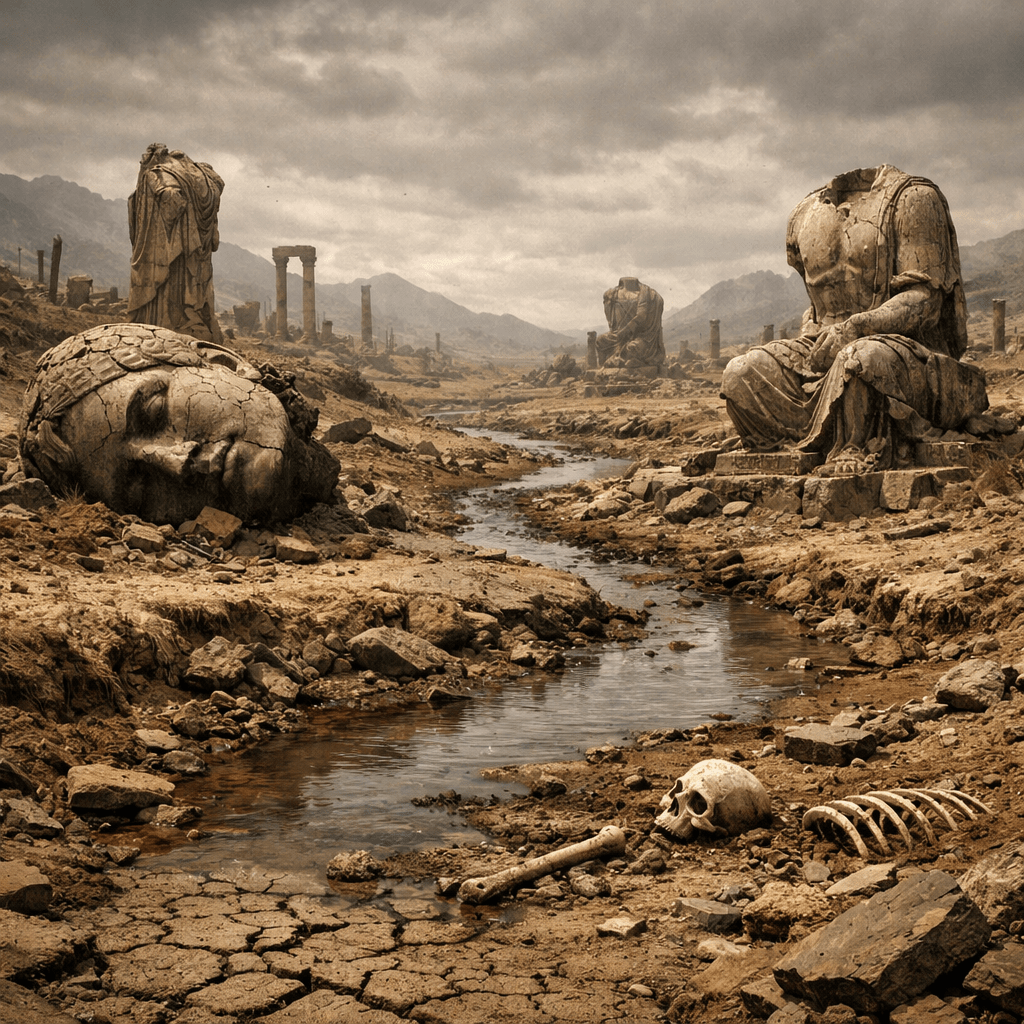
by T.S. Eliot
This poem has taken an important place in modern literature; I do my best with it; I mispronounce a few words, but I do not think that, in such a long work, it requires me to correct the recordings. If you read the poem while listening, you will notice that, toward the end, when the matter is the stone mountains and no water, I say curious teeth, when the text reads carious teeth. That means rotted teeth—who knew? I do not think I will correct it: correct it in your mind. In another instance, when the matter is the loud sounds coming from saloons, I say fishermen when the word is actually fishmen, so this long, weighty poem has one extra syllable: Do you think it matters?
I love the work of T. S. Eliot: I have always found The Waste Land very challenging, and even in my advanced adult years, I am still getting accustomed to it—I am growing to like it. Some performers sing some of the lines. I am not a singer, so I did not do that. When the German or French or Italian language parts got long, I used AI’s help by cloning my voice with about twenty minutes of recorded material, using an online service named ElevenLabs. I asked it to say those challenging lines for me.
I have reviewed the entire slideshow with The Waste Land in it. I was impressed with the quality of it; I watched it on my smart TV, mounted high on my livingroom wall. The photos fill the screen nicely—I do not match themes; they are my photos and my reading of this impressive poem. My voice close seems to fit. I hope you enjoy this very challenging and important work that defines, in a way, modern literature. Maybe I will write somehting like this someday soon.


Leave a Reply