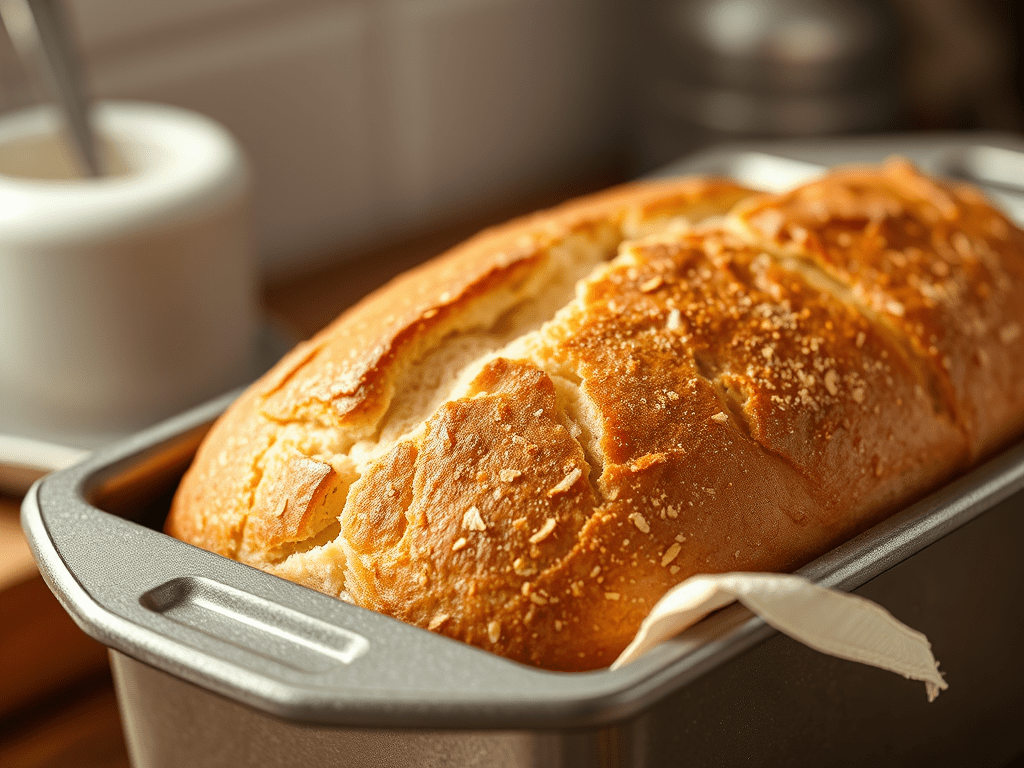
Country Loaf Gluten Free bread
- Make Carol’s Blend; it is a wheat flour substitute that helps make gluten free bread work:
Mix these in a large bowl, using a whisk. Then, store it in an airtight container (make half this much if you like).
3 cups sorghum flour
3 cups potato starch
2 cups tapioca flour
- Next, measure some dry ingredients out:
Lay out a piece of parchment; measure onto it:
2 tablespoons yeast
2 tablespoons sugar
1 teaspoon salt
1 teaspoon xanthan gum
1 teaspoon guar gum
- Next, measure out the flours
Place into the bowl of a stand mixer:
2 cups of potato starch
1 cup Carol’s blend
- Next
Add the other dry ingredients from the parchment to the stand mixer bowl.
- Next, prepare
3 egg whites
4 tablespoons (quarter cup) oil or barely melted butter
1 and 1/2 cups regular tap water—slightly warm is best
2 teaspoons cider vinegar
- Mount the stand mixer bowl in the stand mixer.
Attach the paddle of the stand mixer—not the whisk or the dough hook.
On low, mix all the dry ingredients until blended, about 30 seconds.
Add the oil or melted butter.
Add the egg whites.
On medium-low speed, slowly add the water and vinegar.
- When the water is integrated, set the stand mixer speed to high.
Blend for about 40 seconds on high; this will whip air into the dough (whip up the egg whites) and get all the dough off the paddle. Mix long enough; this helps the bread to rise while baking and produce nice air holes.
- Using a silicone spatula, put the dough into a normal bread pan that has been coated lightly with softened butter; put the butter only on the bottom so that the bread can climb the sides of the pan (I use one of those gold, semi-nonstick pans). Even out the dough in the pan with the spatula. Lastly, wet the spatula and smooth the top of the dough.
Place the dough on a wire rack over a large bowl of warm water (especially important in cold weather; otherwise, summer room temperature is good enough). I use a large double-walled bowl so that the heat holds. I place a dishtowel over the rack to hold the warmth in; then, I place a dishtowel over the bread dough. When the dough rises to the edges of the pan (around an hour’s time usually), slash the top of it; I use a small, serrated paring knife. Let it rise until it is nicely rounded above the edges of the pan. Do not let it rise much beyond a nice little arch, or it will overflow the pan when you start baking it.
Put the pan into a 350-degree oven. Bake the bread for a full 50 minutes. This may seem long, but you must burn the sides so that they hold firm while the bread is cooling (there is no gluten to provide structure). Use a metal spatula if necessary to remove the loaf from the pan—it usually just releases. Cool it on a wire rack set somewhat above the table—don’t let the cooling loaf sweat.
The loaf will tend to sink in on the sides unless you slightly over-bake it. If it ends up looking like an hourglass, don’t worry; it’s still good, but bake it longer the next time.
I let the loaf cool to room temperature; then, I put it in the refrigerator on a wire rack. When it is cold, I put it into a jig (Presto brand Bread Slicing Guide) and slice it with a serrated knife.
Then, I freeze it all in gallon-size freezer bags. I mostly eat it toasted, with butter and honey and a little salt and cayenne pepper on top; I also make French Toast with it. I find it heavy for sandwiches, but I might dice up one piece and have it with a burger patty with lettuce and onion and mayonnaise on a plate.
It is best to add lunch-type sandwich ingredients (tuna salad) at the last minute because GF bread turns to mush with moist ingredients next to it. You can use lettuce to make a sandwich ahead of time to keep the bread from getting too moist
The author of the book meant this recipe for French baguettes. I make a country loaf with it, and it satisfies all my needs for bread. This is an adaptation of a recipe in the book 1,000 Gluten-Free Recipes, by Carol Fenster, Ph.D.
 johnbattle1.blog