~~Don’t think about anything else: Think about gluten. Buy everything labeled gluten-free. I will tell you how it would work for me, given the food stores that exist around me. The frozen case has multi-grain, gluten-free bread. It’s very nice. Toast it; make sandwiches. There is gluten-free frozen pizza in the frozen case, in a different area. It has cauliflower crust or some other kind of alternative ingredient crust: millet, sorghum, tapioca, rice, white potato—who cares, right? Get things that are labeled gluten-free—stop thinking: Get gluten-free food, and satisfy all your needs with bread and meat and fruit and vegetables. Satisfy all your needs just as usual and spend three days being gluten-free. If you feel much, much better, stay off gluten: gluten is a protein in wheat, barley, rye, and (I say, not all say) oats. If you don’t feel much better, I would say: forget about it. Feeling much, much better would mean being happy, quick in your thinking, energetic (almost giddy), and not depressed. Being off gluten means the villi in your small intestine are not inflamed, and they are absorbing all the nutrients from the food you are taking in. See this illustration:`
https://www.verywellhealth.com/understanding-intestinal-villi-562555
If you have celiac disease, profound sensitivity to gluten (you react to even a few molecules here and there) your blood system is poisoned with half-digested proteins, resulting from poorly functioning villi.
In the literature, one expert has compared this to being constantly in something like an opioid high. Opioid high might be nice after surgery when it could ease the pain, but living your life in a half opiate high will get old—believe me! I have been there—was there—until twenty years ago. In that case, you must avoid gluten.
In my early days of being gluten-free, I did not know all the details. At a health food store, I regularly picked up Einkorn breakfast cereal. I tolerated it surprisingly well; however, it is wheat—ancient, unaltered (never hybridized) wheat. Today’s wheat has much more gluten, and it has been hybridized to survive a windstorm in the field: The stalk is twelve inches tall instead of two feet tall—good for world hunger; not good for Northern European folk, with delicate digestive systems. Give gluten-free a try. If you end up converted, here is something I love as a celiac, full-time, gluten-free person.
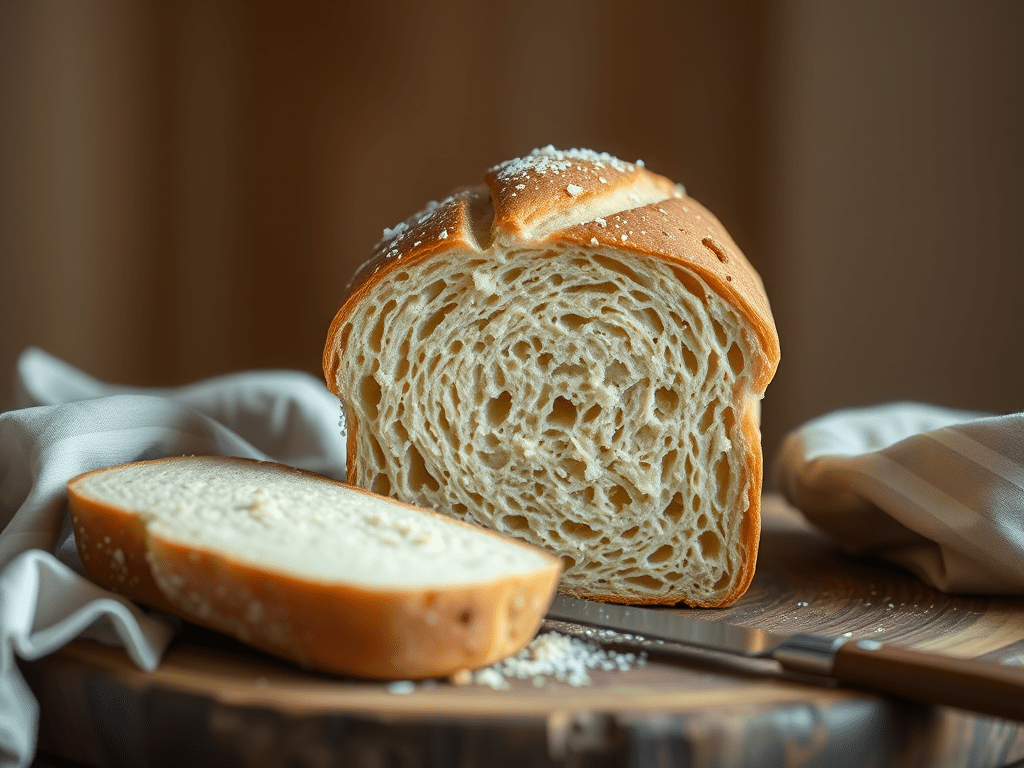
My bread recipe. It is an adaptation of a recipe in the book 1,000 Gluten-Free Recipes, by Carol Fenster, Ph.D.
I buy bags of this stuff at my local grocery market, often by the brand name Bob’s Red Mill: Sorghum Flour, Potato Starch (not potato flour), Tapioca Flour (starch). Buy two sorghum, four potato, and two tapioca. Also, get a bag of hemp hearts. I buy the Kirkland brand when I shop at Costco and keep it in my refrigerator freezer.
First, make Carol’s blend. Mix these in a large bowl, using a whisk. Then, store it in an airtight container (make half this much if you like).
3 cups sorghum flour
3 cups potato starch
2 cups tapioca flour
Lay out on a large piece of parchment.
About 6 tablespoons hemp hearts.
Write these next 5 with a permanent marker on the parchment (use the same parchment over and over) because missing any one of them will likely ruin the bread.
Lay out
2 tablespoons yeast
2 tablespoons sugar
1 teaspoon salt
1 teaspoon xanthan gum
1 teaspoon guar gum
Put into the bowl of a stand mixer
2 cups of potato starch
1 cup Carol’s blend
Now, dump all the dry ingredients together in the stand mixer bowl.
Prepare
3 egg whites
4 tablespoons (quarter cup) oil or melted and cooled to just liquid and warm melted butter
1 and 1/2 cups regular tap water (not warm)
2 teaspoons cider vinegar
Mount the stand mixer bowl in the stand mixer.
Attach the paddle of the stand mixer, not the whisk or dough hook.
On low, mix all the dry ingredients until blended.
Add the oil or melted butter.
Add the egg whites.
On medium-low speed, slowly add the water and vinegar.
When the water is integrated, set the stand mixer speed to high.
Blend for about 25 seconds on high; this will whip air into the dough and get all the dough off the paddle.
Using a silicone spatula, put the dough into a normal bread pan that has been coated lightly with softened butter; put the butter only on the bottom so that the bread can climb the sides of the pan (I use one of those gold, semi-nonstick pans). Even out the dough in the pan with the spatula. Lastly, wet the spatula and smooth the top of the dough.
Place the dough on a wire rack over a large bowl of warm water. I use a large double-walled bowl so that the heat holds. I place a dishtowel over the rack to hold the warmth in; then, I place a dishtowel over the bread dough. When the dough rises to the edges of the pan (around an hour’s time usually), slash the top of it; I use a small serrated paring knife. Let it rise until it is nicely rounded above the edges of the pan. Do not let it rise much beyond a nice little arch, or it will overflow the pan when you start baking it.
Put it into a 350-degree oven. Bake it for a full 50 minutes. This may seem long, but you must burn the sides a little so that they hold firm while the bread is cooling. Use a metal spatula to remove the loaf from the pan. Cool it on a wire rack set somewhat above the table—don’t let the cooling loaf sweat.
The loaf will tend to sink in on the sides unless you slightly over-bake it. If it ends up looking like an hourglass, don’t worry; it’s still good, but bake it longer the next time.
I let the loaf cool to room temperature; then, I put it in the refrigerator on a wire rack. When it is cold, I put it into a jig (Presto brand Bread Slicing Guide) and slice it with a serrated knife.
Then, I freeze it all in gallon-size freezer bags. I mostly have it toasted, with butter and honey and a little salt and cayenne pepper on top; I also make French Toast with it. I find it heavy for sandwiches, but I might dice up one piece and have it with a burger patty with lettuce and onion and mayonnaise on a plate. It is best to add lunch-type sandwich ingredients at the last minute because GF bread turns to mush with moist ingredients next to it. You can use lettuce to make a sandwich ahead of time to keep the bread from getting too moist
The author of the book meant this recipe for French baguettes. I make a country loaf with it, and it satisfies all my needs for bread. The addition of hemp hearts is entirely my idea—it seems to make up for the protein gluten would provide.~~
 johnbattle1.blog
Leave a comment